



Ajay Patel is Senior Electoral Technology Advisor with over twenty years of experience in elections and peacebuilding. He has focused on artificial intelligence, information integrity and digital transformation in electoral processes. He has provided electoral assistance in more than a dozen countries, from within the United Nations, the United Nations Development Programme and the International Foundation of Electoral Systems. He has served in the leadership and core teams of Carter Centre and National Democratic Institute election observation missions. Ajay has also been an electoral administrator in the United Kingdom. Outside elections, he served as Special Assistant to United Nations Special Representatives of the Secretary-General. Ajay is the author of UN, UNDP and UNESCO publications on AI, information integrity and elections. He holds a BSc in Computer Science and an MSc from the London School of Economics.

Alberto Fernandez Gibaja is the Head of Digitalization and Democracy at International IDEA, where he leads the Institute global work on AI governance, information integrity, digital public infrastructure, and the protection of democratic processes in the digital space. He has several years of experience advising governments and civil society actors in Europe, Latin America, Asia Pacific and Africa on addressing challenges at the intersection of technology, elections and democracy. He has authored several publications on the topic and publishes often on the media. Prior to International IDEA, Alberto worked with the United Nations, the Club of Madrid and at different universities.

Aleida Ferreyra is the UNDP’s Global Lead for Democratic Institutions and Processes in a Digital Era based in New York, overseeing UNDP’s electoral assistance, parliamentary development, women’s political participation, and digital democracy programming. Aleida has more than 25 years of experience in democratic governance and elections. Since 2005, She has worked with UNDP in several capacities in the field and in headquarters. She served as UNDP Deputy Resident Representative and acting Resident Representative in Panama, acting UNDP Deputy Resident Representative in Venezuela and Senior Electoral Advisor and Project Coordinator in Mexico. She worked as Electoral Policy Specialist, Research Analyst for Inclusive Political Processes, and Governance and Electoral Consultant for UNDP’s Bureau for Policy and Programme Support in New York.
Before joining UNDP, Ms. Ferreyra taught Comparative Political Systems and Institutions at the New School University in New York. She worked as Program Coordinator of the Janey Program for Latin American Studies. She also served as Regional Coordinator and International Electoral Observer for several electoral missions with the Organization of American States from 1996 to 2002. Aleida has an M.A. and an MPhil in Political Science and Government from the New School for Social Research in New York and a B.A. in International Relations from the National Autonomous University of Mexico.
Dr. Anya Schiffrin is a senior lecturer at Columbia University’s School of International and Public Affairs and co-director of the Technology Policy & Innovation Concentration. Her most recent (co-authored) paper is on AI deepfakes and online fraud and she is currently researching media capture in the US as well as mapping New York City influencers who collaborate with the Mamdani administration. She received her PHD (with distinction), from the University of Navarra, after writing a dissertation about solutions to online mis/disinformation.
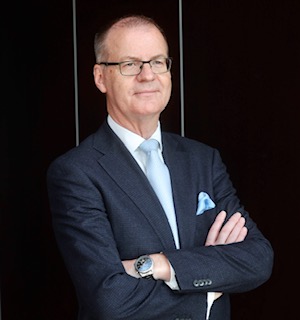
Art O'Leary est directeur général d'An Coimisiún Toghcháin, la Commission électorale irlandaise, un organisme de gestion et de supervision chargé des questions électorales et démocratiques au sens large. De 2014 à 2021, Art a occupé le poste de secrétaire général auprès du président de l'Irlande, agissant en tant que chef de cabinet et conseiller principal du président Michael D. Higgins. Art a également conçu et dirigé la première Assemblée citoyenne d'Irlande en 2012, dont les recommandations ont abouti à plusieurs référendums constitutionnels réussis ; il a depuis dirigé ou conseillé les cinq assemblées nationales qui ont suivi. Auparavant, Art a travaillé au Parlement irlandais pendant plus de 20 ans, principalement au sein de l'équipe de direction en tant que directeur des commissions parlementaires, de l'information et de la communication, des ressources humaines, et à la tête de plusieurs fonctions parlementaires. Il est professeur adjoint à l'École de politique et de gouvernement de l'University College Cork et titulaire d'un MBA de la Henley Business School.

Becky Palmstrom is Senior Advisor for Gender and Social Inclusion at the BBC's international development charity, BBC Media Action. She started life as a journalist, but over the last 15 years has led multi-platform social and behaviour change programmes across Africa, Europe and Asia, working with communities, researchers and creatives to make the world better: reimagining what it means to be an adolescent girl or boy in Rwanda; expanding possibilities for women's participation in Nepal, Afghanistan, northern Nigeria and Ukraine; and creating content with and for young people facing conflict in Libya, Kenya and Myanmar.
Becky is a Rotary World Peace Fellow and holds master's degrees in Broadcast Journalism and Peace and Conflict Studies from UC Berkeley, as well as a Scottish master's degree from the University of St Andrews focused on gender, conflict, and the social and gender norms that underpin violence.
She believes in creating space for audiences to tell their own stories, and in harnessing technology, evidence and creativity to find the best tool for the job, from soap operas to digital campaigns, to investigative journalism to music videos. Her current work increasingly explores the intersection of gender and technology, including technology-facilitated gender-based violence, the digital harms experienced by women in public life, particularly women journalists, and the implications of AI and evolving digital ecosystems for women's voice, leadership and agency.
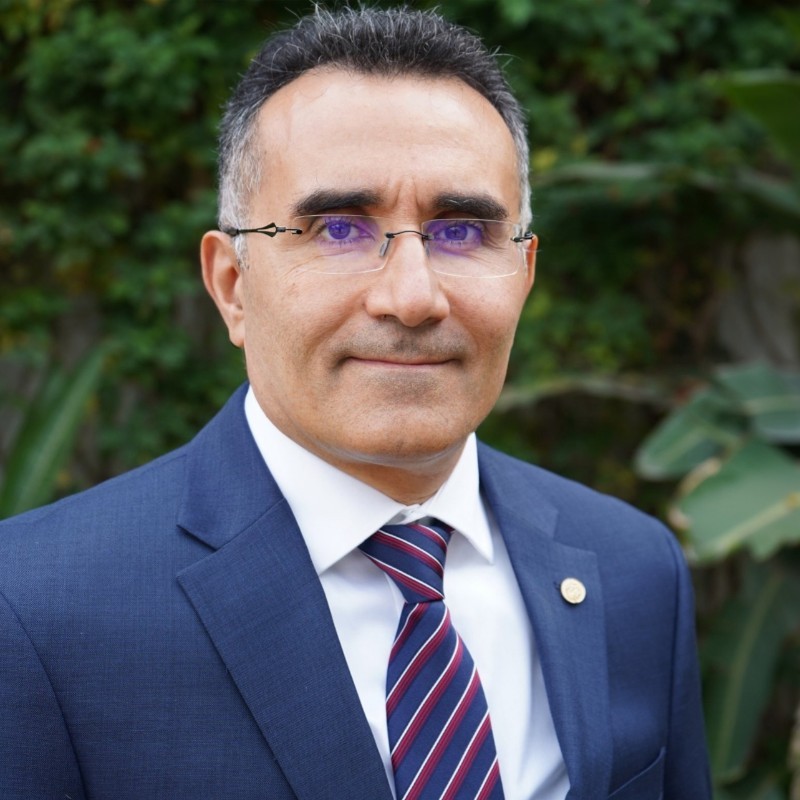
Dr. Bilel Jamoussi has been with the International Telecommunication Union (ITU) since 2010, where he serves as Deputy Director of the Telecommunication Standardization Bureau and Chief of the Study Groups and Policy Department. He works with the ITU's membership of 194 Member States and over 1,000 companies and universities, and leads a team representing more than 80 nationalities. He helps shape international standards for telecommunications, sustainable digital transformation, artificial intelligence, quantum security, and the Internet of Things. He organized three World Telecommunication Standardization Assemblies — Hammamet 2016, Geneva 2022, and New Delhi 2024 — and served as Secretary of the Plenary. He co-founded and manages the ITU AI for Good Global Summit, the United Nations' leading platform on artificial intelligence for sustainable development, and is a frequent speaker at the World Economic Forum in Davos, Mobile World Congress, the Global Cybersecurity Forum, and other leading international fora. Prior to the ITU, he spent 15 years at Nortel, the Canadian telecommunications pioneer, where he served as Director of Technology and Standards and was honored with the company's Innovation and Teamwork Awards and the title of Distinguished Engineer. He is the editor of Internet Standard RFC 3212 on MPLS signaling, the inventor of 23 granted US patents, and a licensed Professional Engineer of Ontario. A Senior Member of the IEEE, he has served on the IEEE Standards Association Board and Corporate Advisory Group and co-founded the IEEE Tunisia Section. Dr. Jamoussi holds a PhD, MS, and BS in Computer Engineering from Pennsylvania State University. He has lived and worked across Tunisia, Canada, the United States, and Switzerland, and is fluent in Arabic, French, and English, with working knowledge of Spanish and German.
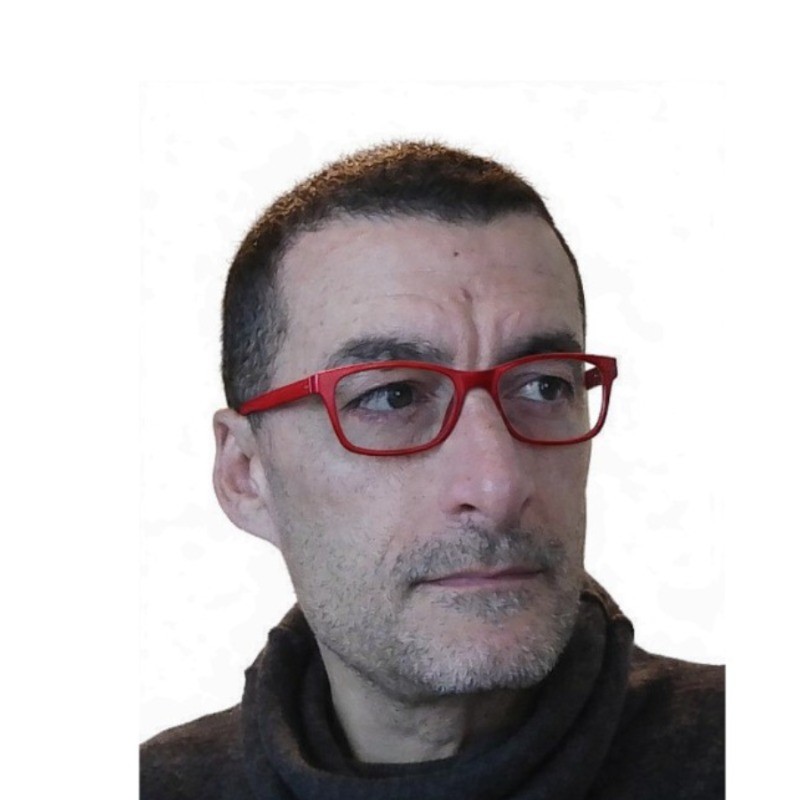
Chahine Hamila is a Senior e-Governance Advisor at the United Nations Development Programme (UNDP), specializing in the design and implementation of large-scale digital government systems. He has worked with governments and international organizations on national information systems spanning elections, digital identity, justice and other public-sector domains. His work focuses on translating emerging technologies, including artificial intelligence, into practical and sustainable government systems, with particular attention to digital public infrastructure, open standards and institutional capacity. He combines a background in computer science and technology with management and finance, and holds degrees from Paris-Saclay, INSEAD, McGill University, Concordia University and École Polytechnique.
.jpg)
Claudette Commanda is an Algonquin Anishinabe from Kitigan Zibi Anishinabeg First Nation located in the province of Quebec. An alumna of the University of Ottawa faculties of Law and Arts, Claudette has dedicated the last 35 years promoting First Nations people, history, culture and rights in various capacities as a University of Ottawa student, professor, member and chair of the Aboriginal education council, and via public speaking events.
She is the chief executive officer of the First Nations Confederacy of Cultural Education Centres, a national organization that protects and promotes First Nations culture, languages and traditional knowledge. She is also the CEO of Maclean Day Schools Settlement Corporation. Ms. Commanda has taught at the University of Ottawa’s Institute of Women’s Studies, Faculty of Education, Faculty of Law and the Indigenous Studies Program, teaching courses on First Nations Women, Native Education, First Nations People and History, Indigenous Traditions, and Decolonization. She was inducted into the Common Law Honour Society, served two terms on the Board of Governors for the First Nations University of Canada and three terms on the Kitigan Zibi band council.
In 2017, Claudette was the first appointed First Nation Elder in Residence for the Faculty of Law, University of Ottawa, and the first person of a First Nation heritage to be complete a full term on the Board of Governors for the University of Ottawa. She was also the Special Adviser on Reconciliation, for the Susan & Perry Dellelce Dean, Faculty of Law (Common Law Section). Claudette is a proud mother of four and a grandmother of 10.
In March 2020, Claudette received the 2020 Indspire Award for culture, heritage, and spirituality.

David Lopez serves as the Head of Civic Responsibility within Google’s Trust & Safety organization, where he directs global, cross-functional readiness efforts for major civic events and elections. Since establishing Google’s central Global Elections team in 2018, David has held several leadership roles across the company, including Head of Strategic Response and External Affairs Manager. Prior to Google, he was Director of Special Projects and Advisor to the President & CEO at the Kaiser Family Foundation, following political appointments in the White House Office of the Chief of Staff and the Office of Management & Administration. David holds a B.A. in Political Science from Temple University.


Ethan Chumley is the Director of Security & Emerging Technology on Microsoft's Tech for Society team, where he leads cybersecurity, elections preparedness, and responsible AI programs. He partners with elections officials, political parties, NGOs, and journalists around the world to counter malign cyber actors and to develop strategies to deploy new AI technologies. Ethan previously worked in disaster response and defense, and holds a degree in Aerospace Engineering from Cornell University.
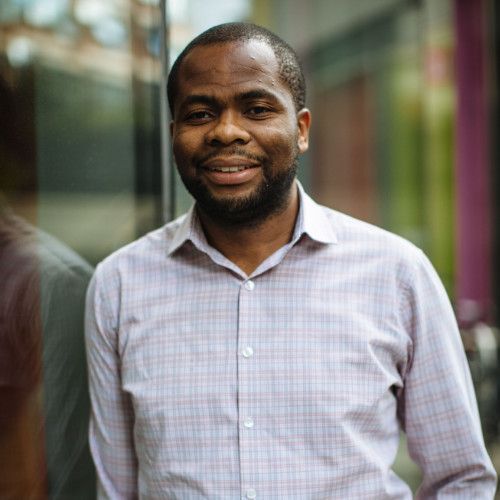
Prof. Fola Adeleke is theExecutive Director and co-founder of the Global Center on AI Governance. Folaleads the knowledge hub, the African observatory on Responsible AI. He holds aPhD in international investment law and human rights from the University ofWitwatersrand and completed his post-doctoral research as a Fulbright Scholarat the Columbia Center on Sustainable Investment, Columbia University and theHuman Rights Program, Harvard University. Fola is also a Visiting Associate Professor atWits Law School South Africa, an Atlantic Senior Fellow on Social and EconomicEquity at the London School of Economics and an Assistant Professor inCommercial Law at the Sobey Business School, St Mary's University, Canada. Folacurrently serves as a Commissioner for the Lancet Commission on AI and HIV.Fola is an NRF rated researcher in South Africa and his research focuses ondata protection, transparency, international investment law and corporateaccountability. Fola previously serves as a co-chair of theTrust and Regulation workstream for the development of South Africa’s NationalAI Strategy under the National Advisory Council on Innovation. Fola has alsoserved on various advisory teams including the AI governance Interoperabilitycommittee under the UN AI Governance for Humanity Lab, Chair of the Africacommittee under the ACM Technology Policy and in the development of Nigeria’sAI strategy and the African Commission and People’s Rights study on ArtificialIntelligence and Human Rights in Africa. Fola is the course coordinator andconvenor for the AI, Ethics, and Policy in Africa Certificate Program at theUniversity of Cape Town, Ecnomics of AI in Africa course at University ofWitwatersrand and AI and Human Rights Certificate Course at the University ofPretoria. Fola is a member of the Nova Scotia Bar, Canada.


Dr. Gabrielle Bardall is Canada Research Chair in Women, Democracy and Power in the Francophonie at Université Sainte-Anne in Nova Scotia, Canada, and a Fellow and Adjunct Professor at the Centre for the Study of Security and Development at Dalhousie University. Dr. Bardall has supported democratic governance and electoral processes in more than 60 countries through the United Nations, bilateral development agencies, international non-governmental organizations, and her consulting firm, Herizon Democracy. Her research examines the intersection of gender, technology, and democracy, with a particular focus on political violence targeting women, electoral integrity, and democratic resilience in fragile and authoritarian contexts. Previously, Dr. Bardall served as Vice-President of the Parliamentary Centre and as Senior Policy Advisor to Canada's Ambassador for Women, Peace and Security at Global Affairs Canada. She holds degrees from McGill University, Sciences Po Paris, and the Université de Montréal, and was awarded both the American Political Science Association Congressional Fellowship and the Pierre Elliott Trudeau Foundation Doctoral Scholarship for her contributions to research on gender-based political violence.
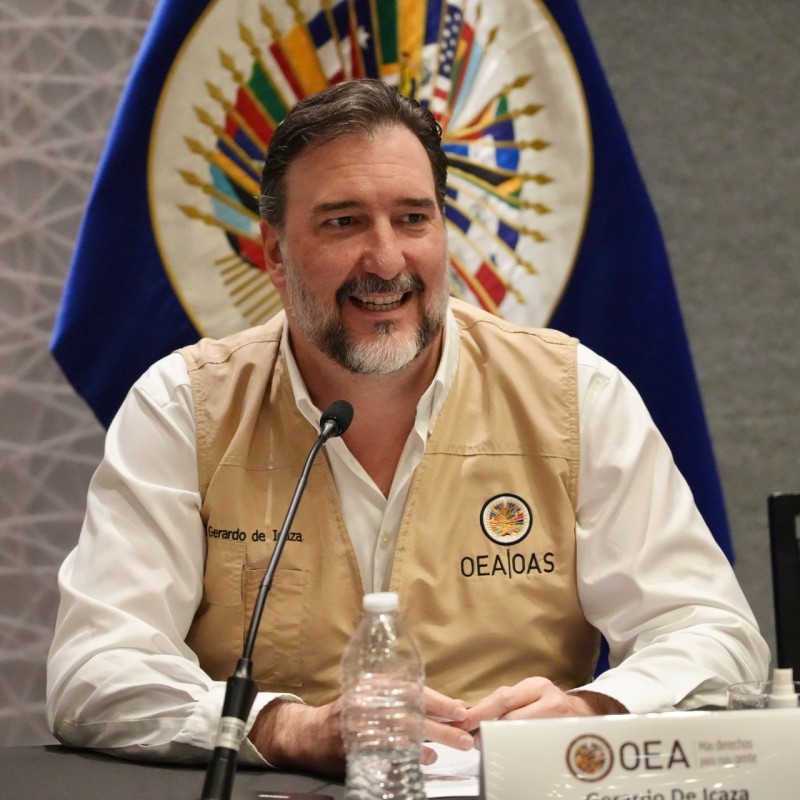
Gerardo de Icaza is the Director of the Department of Electoral Cooperation and Observation of the Organization of American States (OAS) since March 1, 2014. In this post, he has led more than 100 Electoral Observation Missions in 27 countries. In 2018 and 2025, he served as acting Secretary for Strengthening Democracy of the OAS. Previously, at the National Electoral Institute of Mexico (INE) he served as Deputy Legal Director for Overseas Voting and as Coordinator of the Technical Committee of Specialists on Overseas Voting.
He was a law clerk and then Head of the International Affairs Unit in the Electoral Tribunal of Mexico. He studied Law and has a Master's Degree in International Relations and Communication. He has taught at several universities and is a well-known speaker in the democracy circuit. His well-known publications include "International Law of Democracy" coordinated with former OAS Secretary General, Luis Almagro. His most recent articles in the Journal of Democracy include “Why Election Observers Are Human-Rights Defenders” and “The Narrative of Fraud in Elections.”
He is also a member of the Impact Advisory Board of the Democracy Action Lab (DAL) at the Center on Democracy, Development, and the Rule of Law (CDDRL) at Stanford University, member of the Working Group on Reinforcing Democratic Norms through Regional Mechanisms, led by the European Democracy Hub organized by Club de Madrid, representative of the OAS to the Council for Democratic Elections of the Venice Commission, and winner of The Leo S. Rowe Memorial Award 2025 of the OAS.
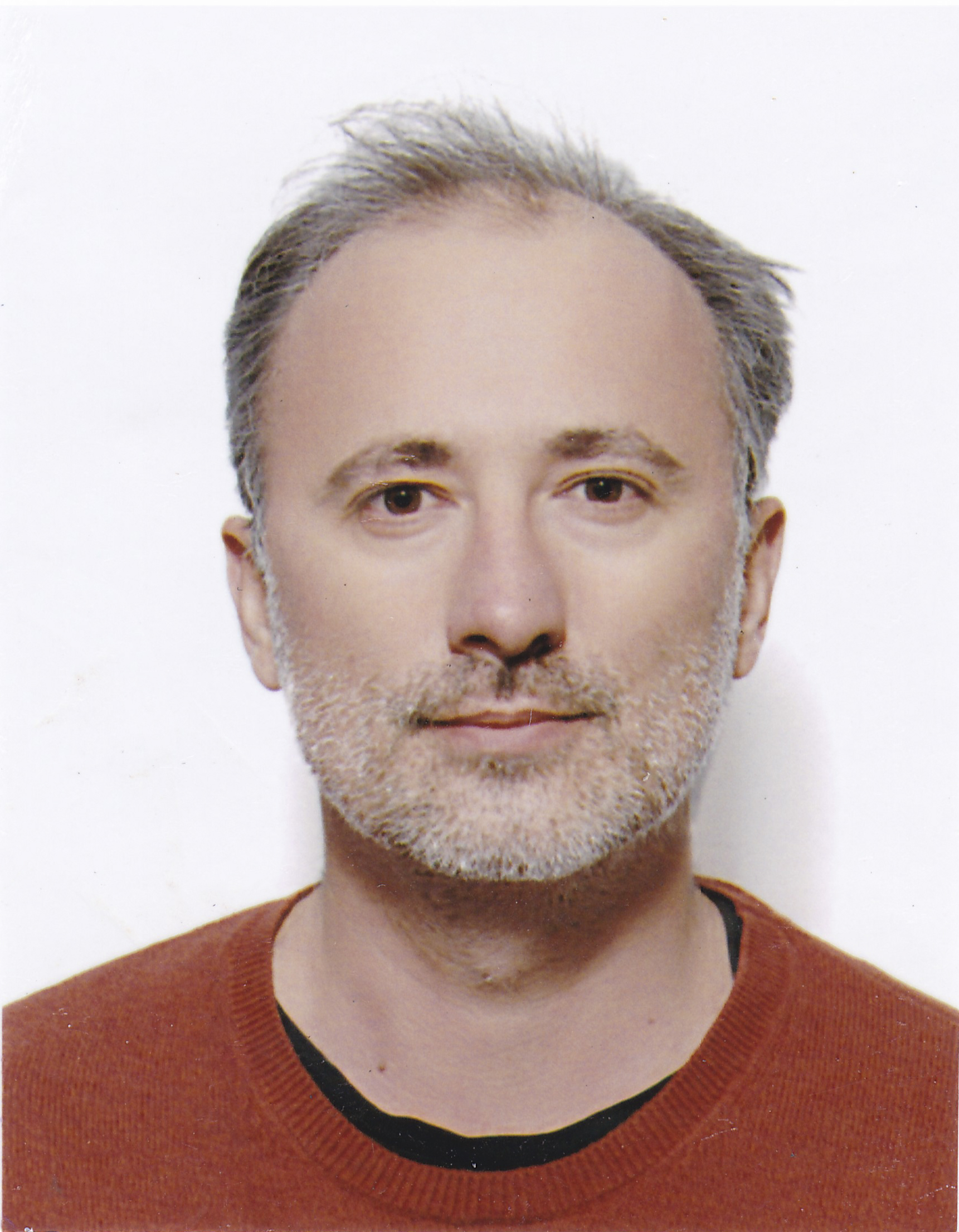
Goran Petrov occupe le poste de conseiller électoral au sein du BIDDH de l'OSCE depuis 2021. Auparavant, il a travaillé pendant plus de 25 ans en tant que consultant pour le BIDDH, l'UE, l'ONU et d'autres organisations internationales spécialisées dans l'observation et l'assistance électorales.
Avant de rejoindre le BIDDH, il a été chef adjoint de missions d'observation électorale en Bulgarie, aux États-Unis, en Biélorussie, au Kazakhstan et en Arménie. Il a observé plus de soixante-dix élections à travers l'Europe, l'Asie et l'Afrique, et possède une expertise en administration électorale, inscription sur les listes électorales, cybersécurité et technologies de vote.
Dans le domaine de l'assistance électorale, Goran a contribué en 2014 à un projet financé par l'UE visant à soutenir la CEC du Kirghizistan dans l'introduction de l'identification biométrique des électeurs et de scanners de bulletins de vote. En 2018, en collaboration avec l'IFES, il a conseillé la CEC d'Ukraine sur le renforcement de la cybersécurité électorale. En 2020, il a conçu le concept de flux de travail et a conseillé la Commission électorale d'État de Macédoine du Nord sur l'introduction de l'identification électronique des électeurs.
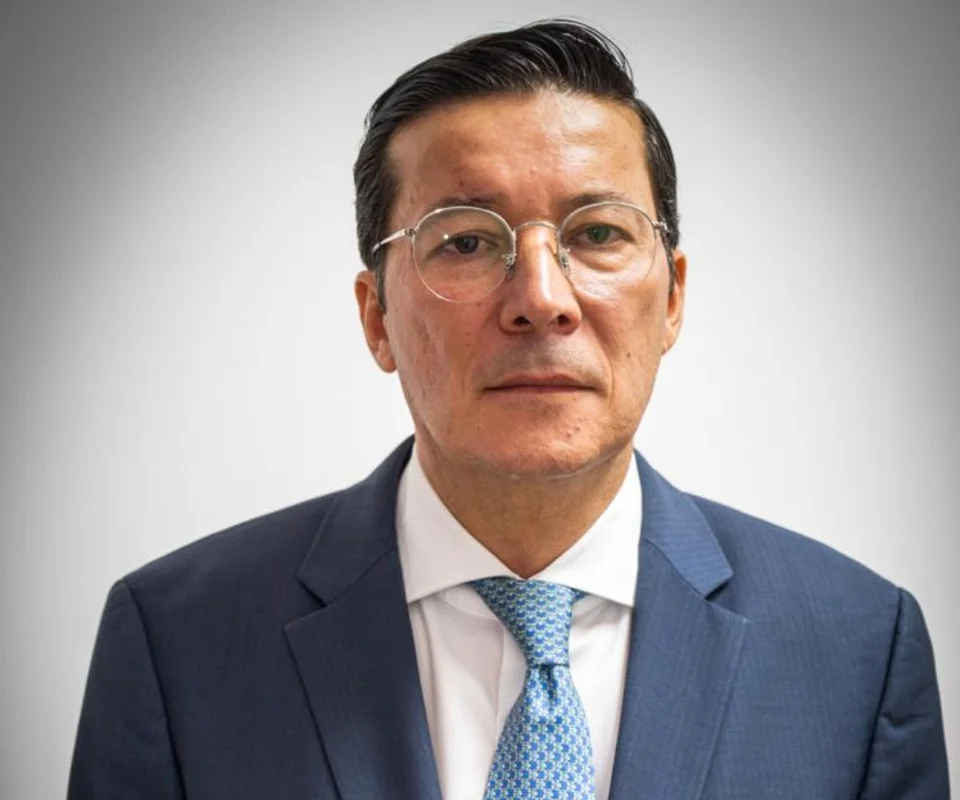

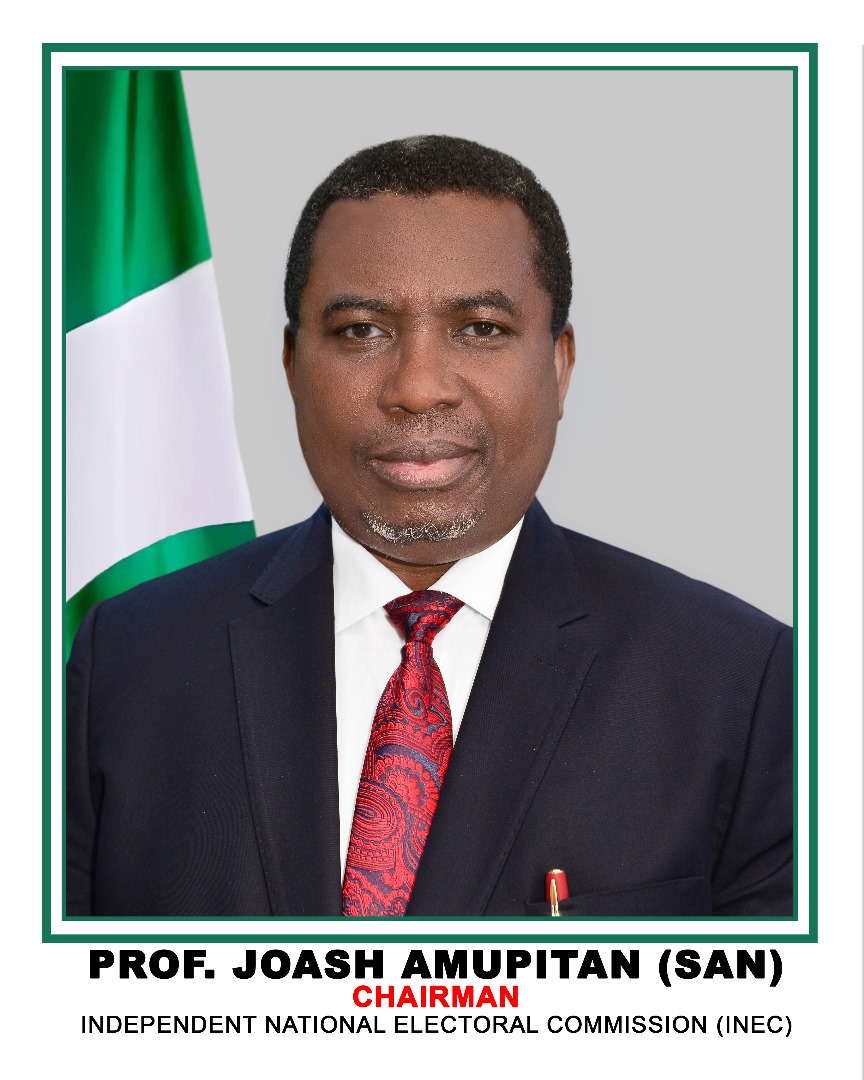
Professor Joash Ojo Amupitan, SAN, has served as Chairman of Nigeria’s Independent National Electoral Commission (INEC) since October 2025. A distinguished legal scholar, practitioner and administrator, he is committed to delivering free, fair, credible, transparent and inclusive elections while strengthening INEC’s independence, professionalism and integrity. Before joining INEC, Professor Amupitan was Deputy Vice-Chancellor (Administration) at the University of Jos, where he previously served as Dean of the Faculty of Law and Head of the Department of Public Law. He became a Professor of Law in 2008 and was elevated to the rank of Senior Advocate of Nigeria in 2014. He holds LL.B., LL.M. and Ph.D. degrees in Law and has published more than 50 scholarly works. His areas of expertise include electoral jurisprudence, evidence, corporate governance and company law. He was also a Fulbright Visiting Scholar at the University of Iowa.

Jona Josifi is the General Director of Electoral Administration at the Central Election Commission of Albania, with extensive experience in electoral administration and the digital transformation of electoral processes. She has been closely involved in the implementation of electronic voter identification, electronic voting initiatives and digital election-management solutions in Albania.
She is also a PhD candidate at the University of Tirana, where her research focuses on the use of technology in elections, particularly electronic voting, digital voter registration, cybersecurity, public trust and the emerging role of artificial intelligence in electoral administration.
Jona has co-authored academic publications on Albania’s e-voting experience, public trust in election technology, and the digital registration of out-of-country voters. Her work explores how emerging technologies can strengthen electoral integrity, accessibility and efficiency while preserving transparency, security and public trust.
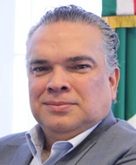
JOSÉ ALBERTO PÉREZ DE ACHA
GENERAL COORDINATOR OF THE TECHNICAL UNIT FOR TECHNOLOGY SERVICES OF THE NATIONAL ELECTORAL INSTITUTE OF MEXICO
He holds a degree in Industrial Engineering from Universidad Panamericana and a Master’s degree in Senior Management from the Pan-American Institute of High Business Direction (IPADE). He also completed a postgraduate program in Data Science and Business Analytics at the Texas McCombs School of Business.
He has served as Chief Executive Officer and Commercial Director at Digitek-Fiinsoft, Corporate Fintech Director at Grupo Findep, Chief Executive Officer of Tax Innovation, Director of Systems and Operations at Financiera Independencia, and Deputy Director of Systems Development at Banco Santander México, among other positions.
He participated in the creation of Fundación Cedros, an organization focused on the education and development of young people from low-income families.
Since January 2025, he has headed the Technical Unit for Technology Services of Mexico’s National Electoral Institute (INE).

Josée Villeneuve occupe le poste de sous-directrice générale des élections chargée des affaires régulatoires à Élections Canada. Elle supervise les différentes fonctions et les programmes de l'organisme visant à promouvoir l'intégrité électorale et le respect de la législation, notamment en matière de financement politique, et gère les relations entre le directeur général des élections et le Parlement. Auparavant, elle occupait le poste de directrice principale chargée du financement politique au sein de l'organisme.
Josée a rejoint Élections Canada en 2016. Auparavant, elle était directrice au sein de la Direction des pratiques monopolistiques du Bureau de la concurrence, ainsi qu’au Bureau du Commissaire à l’information du Canada, où elle a contribué à l’élaboration de la Loi type interaméricaine de l’OEA sur l’accès à l’information publique (2012). Josée possède une expertise en matière de conformité et de surveillance. Elle est également la responsable principale chargée de la divulgation des actes répréhensibles et de la prévention des conflits d’intérêts. Josée est titulaire d’un diplôme en droit de l’Université de Montréal et d’un diplôme d’études supérieures en gestion de l’École des hautes études commerciales de Montréal. Elle est également auditrice interne certifiée.

Karen Ahues is a journalist and holds a Master’s degree in Political Science. Her career has been linked to strategic communication in the public sector. She has served as Head of Communications at the Servel since 2019, leading the institution’s strategic communications agenda to strengthen electoral integrity, public trust, and democratic participation. Her work focuses on the intersection of elections, artificial intelligence, gendered disinformation, and the role of electoral management bodies in safeguarding inclusive and trustworthy democratic processes. Karen specializes in crisis communication and the management of public controversies. During the most intensive electoral period in Chile’s history, she led the design and implementation of Servel’s strategies for preventing, monitoring, and responding to electoral disinformation, toxic communication, and other threats to the integrity of the information environment. Since 2024, she has co-coordinated, together with UNDP Chile, the Electoral Information Integrity Governance Roundtable, a multi-stakeholder initiative that brings together public institutions, academia, civil society, and digital platforms to strengthen cooperation against electoral disinformation. She also coordinates Servel’s Observatory on Digital Violence Against Women in Politics.

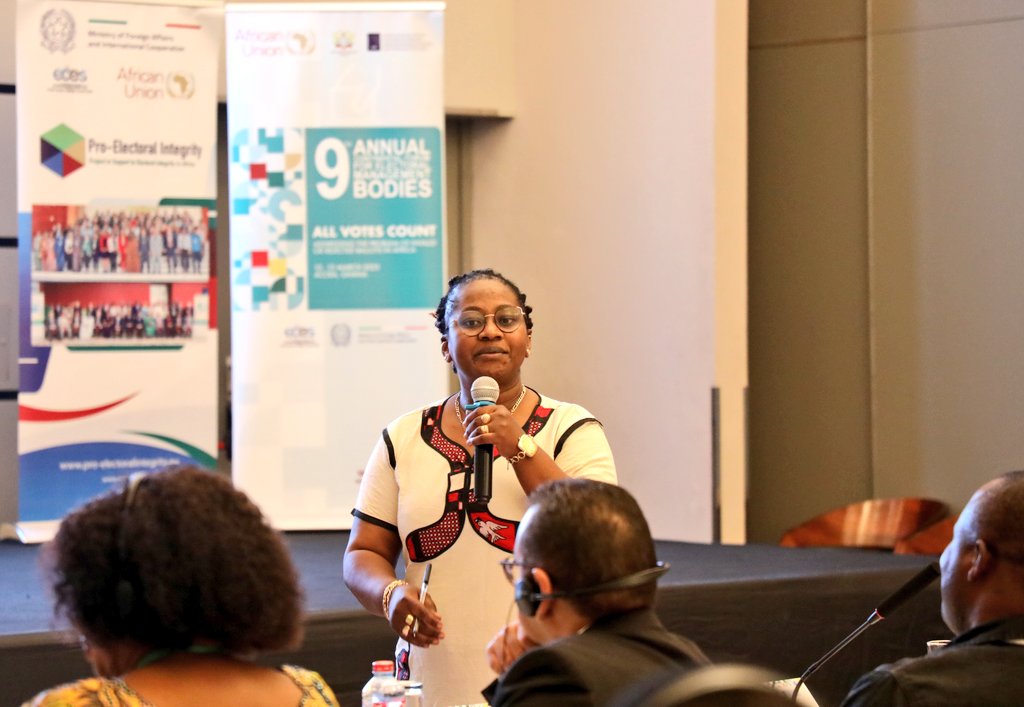
Karina Kakasi Siaba is the Head of the Democracy and Elections Unit (DEU) within the African Union’s (AU) Department of Political Affairs, Peace and Security (DPAPS). With over 25 years of experience, she brings extensive expertise in electoral process management, democratic governance, conflict prevention, multilateral diplomacy, and the handling of complex political transitions and crises. She has engaged with high-level stakeholders across the United Nations (UN), European Union (EU), Regional Economic Communities (RECs), and other technical and financial partners (TFPs). Karine has followed more than 40 electoral processes across Africa, Europe, and Latin America, including in transition, crisis, and post-conflict settings, and is widely recognized for her command of issues relating to governance, inclusion, gender, peace, and stability. Before joining the African Union, Karine served for nearly a decade as an Electoral Advisor in UN peacekeeping missions in the Democratic Republic of the Congo (MONUC) and Côte d’Ivoire (UNOCI). She is an accredited BRIDGE facilitator and a certified trainer for AU election observer programmes. She holds a diploma in Election Administration from Paris I Panthéon-Sorbonne University, a master’s degree in public relations from the University of Information and Communication Sciences in Kinshasa, and multiple certifications from Clingendael (The Hague) and UNITAR in negotiation, conflict prevention, and mediation. Karine is currently pursuing a doctorate in Diplomacy and International Relations at the Center for Diplomatic and Strategic Studies (CEDS–INSEEC U) in Paris.
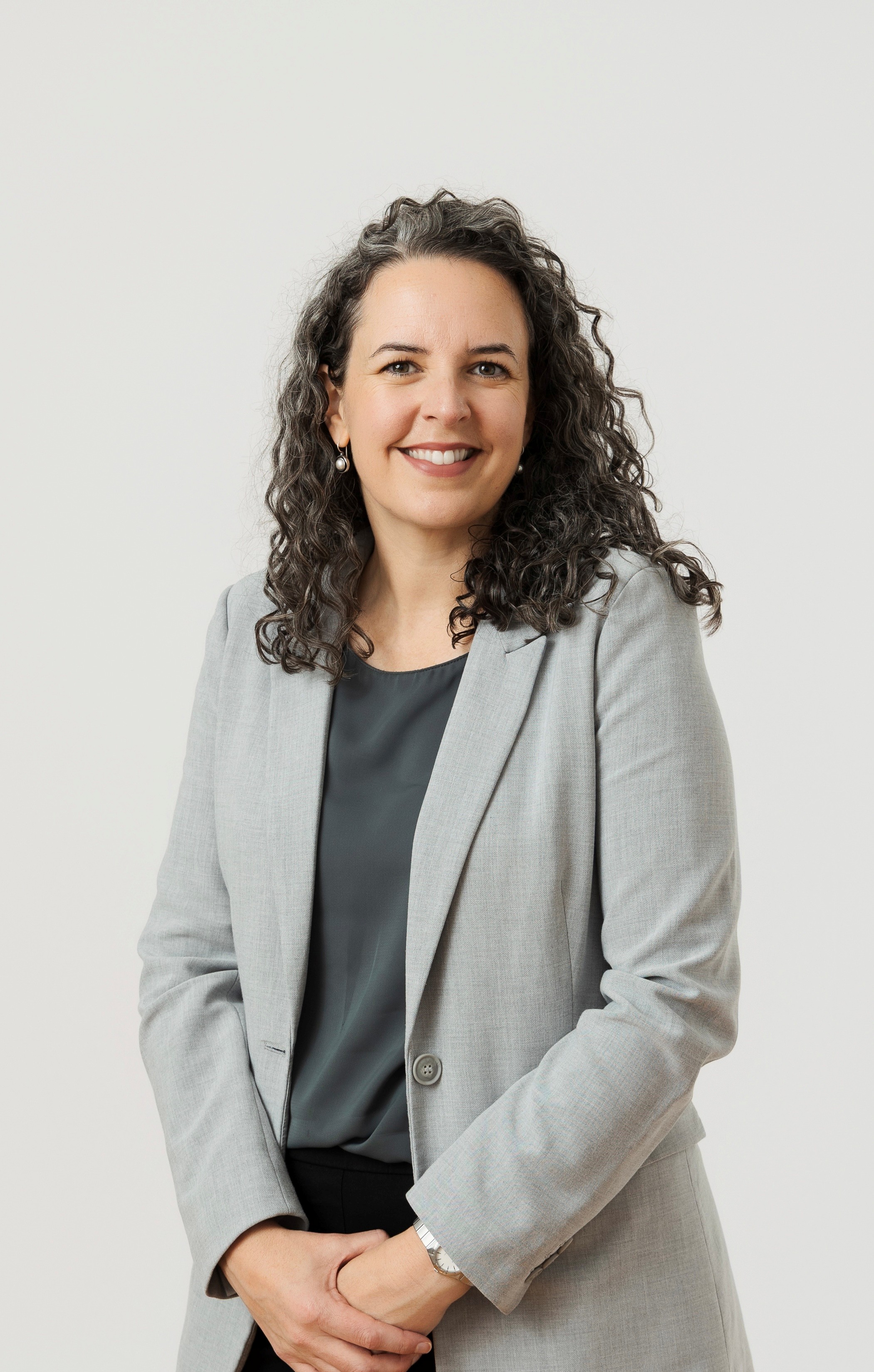
Kath Gleeson joined the Australian Electoral Commission (AEC) in 2010. She is the Deputy Electoral Commissioner and National Election Manager. In this role, she has oversight of the AEC’s operations and the delivery of federal elections, referendums, by-elections, and other election events, is the Chair of the Electoral Integrity Assurance Taskforce, and is the AEC’s Indigenous Champion. Areas of focus during her career include large-scale service delivery and event management in high-risk settings; wide-ranging stakeholder engagement across government, industry and the Indo-Pacific region; major IT program delivery and legislative reform; institutional capability building and governance for operational delivery; and driving improved institutional trust and equity of access to services. She has performed roles focused on electoral management, reform and operational delivery both in Australia and overseas, and has spent time in the not-for-profit sector and in academia, where her focus was on Australian foreign policy, political and democratic theory and security studies. She has also spent time seconded to the Australian National University’s National Security College building the capability of national security professionals across government. Kath holds a PhD in Politics and International Relations from the University of New South Wales, a Bachelor of Arts (Honours) from the University of Newcastle and is a graduate of the Australian Institute of Company Directors.
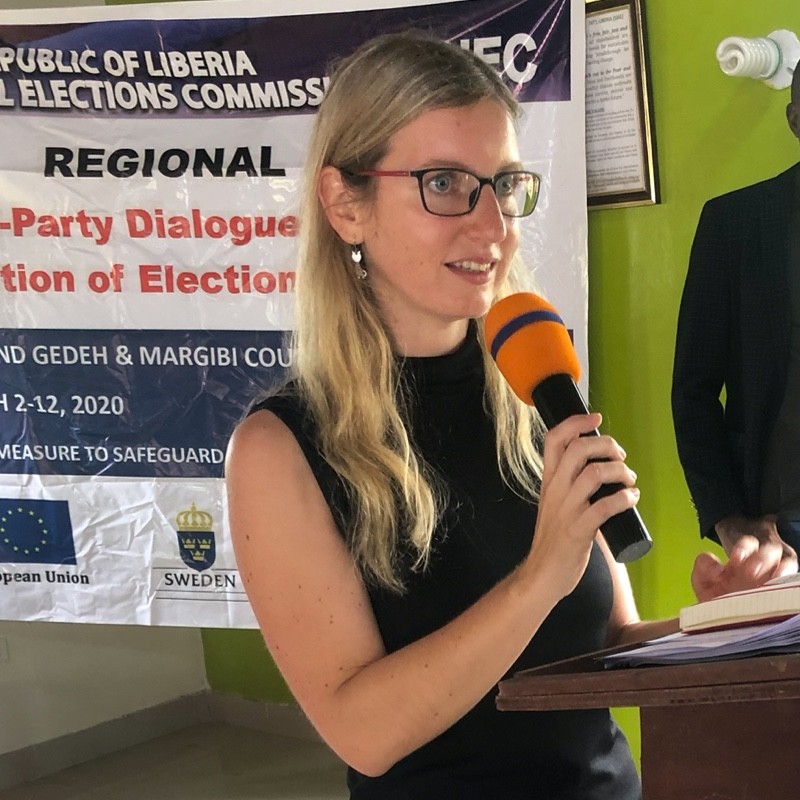
Lenka is a Chief Technical Adviser for electoral assistance with UNDP Ethiopia. She has more than 17 years of experience in elections, international relations, human rights, governance and development. Between 2019 and 2024, she led UNDP electoral assistance to Liberia in a similar - Chief Technical Adviser - role. Lenka also provided electoral assistance and advisory support to the electoral management bodies and senior officials working with the EU and UN in Afghanistan (2015 – 2019). Prior to that, she worked with the EU Delegation to Sudan, International Foundation for Electoral Systems, Permanent Mission of the Czech Republic to the UN in New York, and the Czech Ministry of Industry and Trade. She also took part in a dozen election observation missions (EOM) with the EU and the OSCE/ODIHR, including as a member of the Core Team (Legal and Human Rights Analyst with the EU EOM in Burundi and Election Analyst with the OSCE/ODIHR EOM to Bosnia and Herzegovina). Before arriving to Ethiopia, she worked as Elections and Governance Consultant with various organizations including UNDP, OSCE/ODIHR and International IDEA, mainly on program development, electoral research, advice, and analysis.
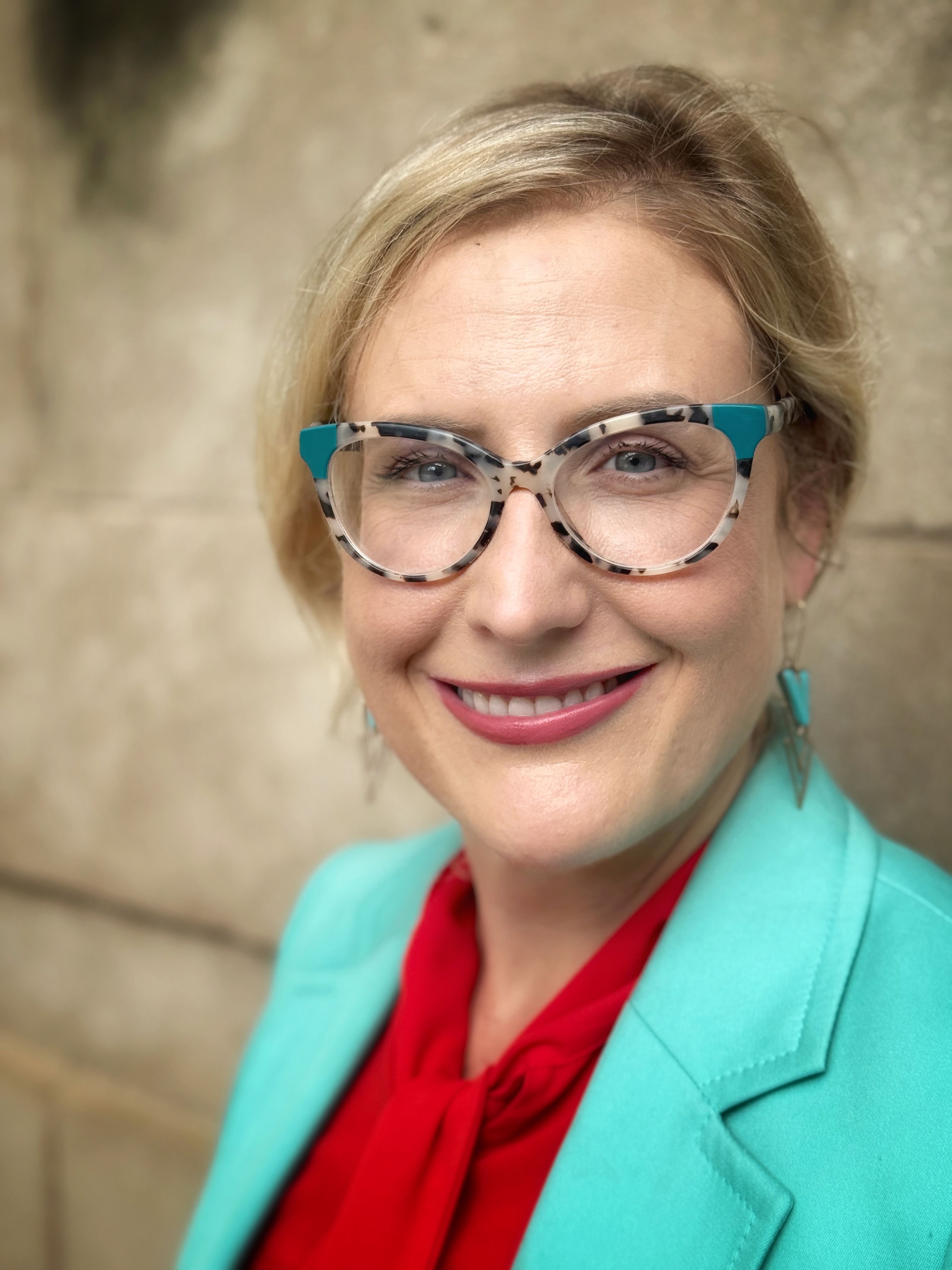
Dr. Lisa Poggiali is the Chief AI Advisor at the International Foundation for Electoral Systems (IFES), where she leads efforts on AI, global technology policy and multistakeholder engagement. An anthropologist by training, she has over 15 years of experience working at the nexus of emerging technology, democracy and geopolitics. Lisa previously served as the Senior Democracy, Data and Technology Advisor at USAID, where she played a pivotal role in shaping the Agency’s digital democracy portfolio. In this capacity, she crafted strategy, policy, programs and research to support the safeguarding of democratic institutions and norms in the face of rapid technological innovation and evolving global digital governance challenges. Her efforts have empowered governments, civil society and industry across five continents to address emerging issues related to digital surveillance, data protection and security and information integrity, and to develop and harness technologies that strengthen democratic resilience and respect for human rights. Lisa earned her Ph.D. in Anthropology from Stanford University.
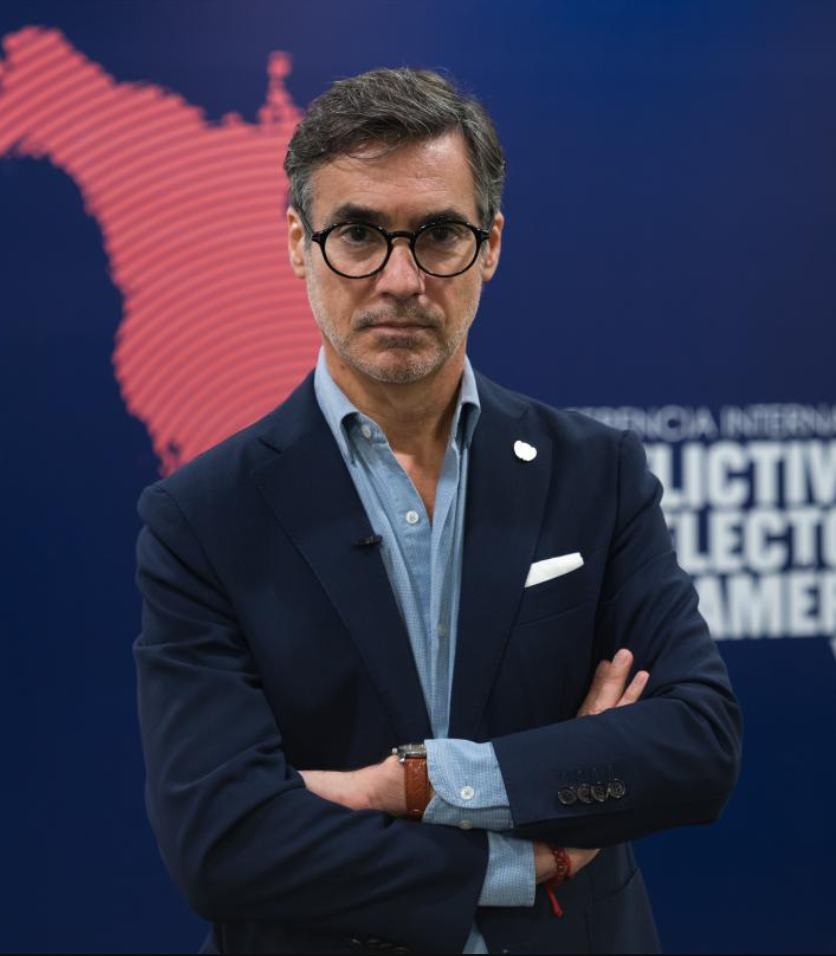
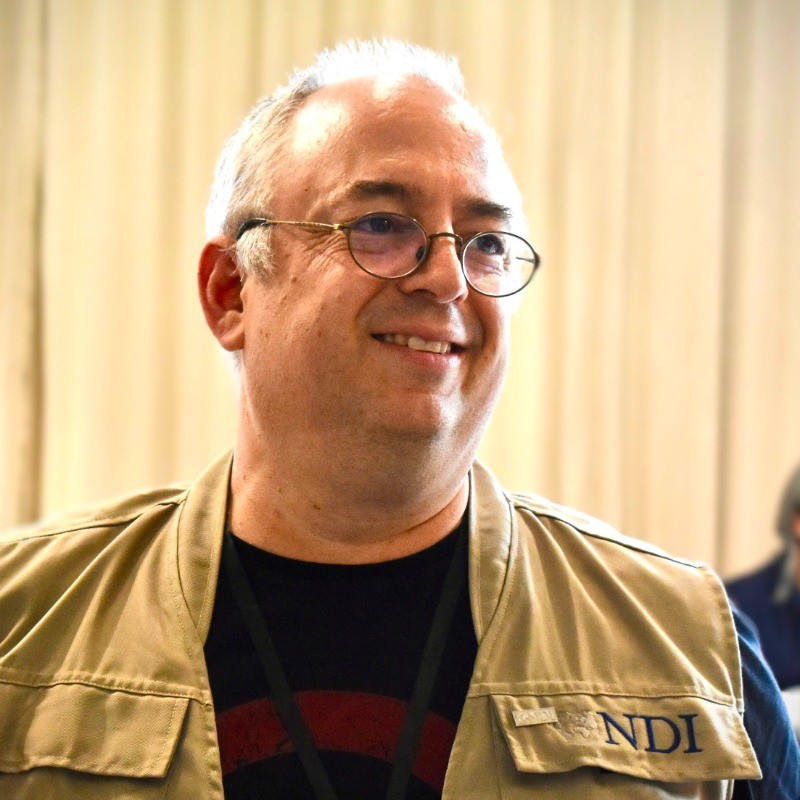
Mario Mitre is a Senior Advisor and Computer Scientist (B.S. in Computer Science, 1995; Masters of International Affairs, 2005) with nearly two decades of international experience in strengthening democratic processes, electoral integrity, and civic/political leadership across Asia, Africa, Europe, and Latin America. This expertise is focused at the critical intersection of technology and democracy, leveraging technical training to inject technological tools that empower change agents for more efficient and resilient organising and communication. As a leader in strengthening electoral integrity, Mr. Mitre has designed and managed complex, systematic election monitoring methodologies for the National Democratic Institute (NDI). Since 2020, as a Senior Advisor, responsibilities have included promoting electoral integrity globally, coordinating NDI’s international observation missions, and strengthening methodologies to assess election-day quality and monitor the adoption of new technologies. Mr. Mitre has been instrumental in contributing to global principles on Information and Computer Technology (ICT) and Elections and co-authored NDI's toolkit on observing new election technologies. A key focus has been to provide technical assistance to civic and political actors on mitigating challenges resulting from the use of technology by malign actors.
Mr. Mitre’s professional history at NDI includes diverse leadership roles—Senior Advisor, Director of Civic Programmes in Myanmar (2016-2020), and Deputy Director in Ukraine (2012-2015)—demonstrating a capacity to manage operations and institute physical and digital security protocols under high instability and government pressure. Mr. Mitre has consistently consulted with activists and democratic-minded political leaders to enhance organisational capacity, internal democracy, and accountability, making political work more effective and resilient to cyberthreats. He is proficient in English and Spanish, with working knowledge of French and Russian.
Mehdi Benchelah is a senior project officer at UNESCO and is coordinating the Rule of Law, Media and Elections team within the Section for Freedom of Expression and Safety of Journalists. He leads the Judges’ Initiative, a global strategy for the UN work with judicial systems on freedom of expression, access to information and safety of journalists by fostering strategic partnerships with Regional Human Rights Courts, Supreme Courts, Judicial Training Institutes and Prosecutors’ Offices across the world, as well as the implementation of specialized trainings for the judiciary on these issues. He also coordinates the implementation of UNESCO’s Programme for Security Forces, an initiative to train law enforcement officers on human rights, freedom of expression and safety of journalists’ related issues, as well as building police-media relations. At the intersection of these two initiatives, he is also in charge of the Media and Elections programme to promote information integrity, tackle mis/disinformation and uphold the rule of law during election periods while respecting international standards on freedom of expression. Prior to joining UNESCO, Mehdi worked for a decade as a freelance reporter covering international affairs and conflicts in the Arab region, Africa and Latin America.
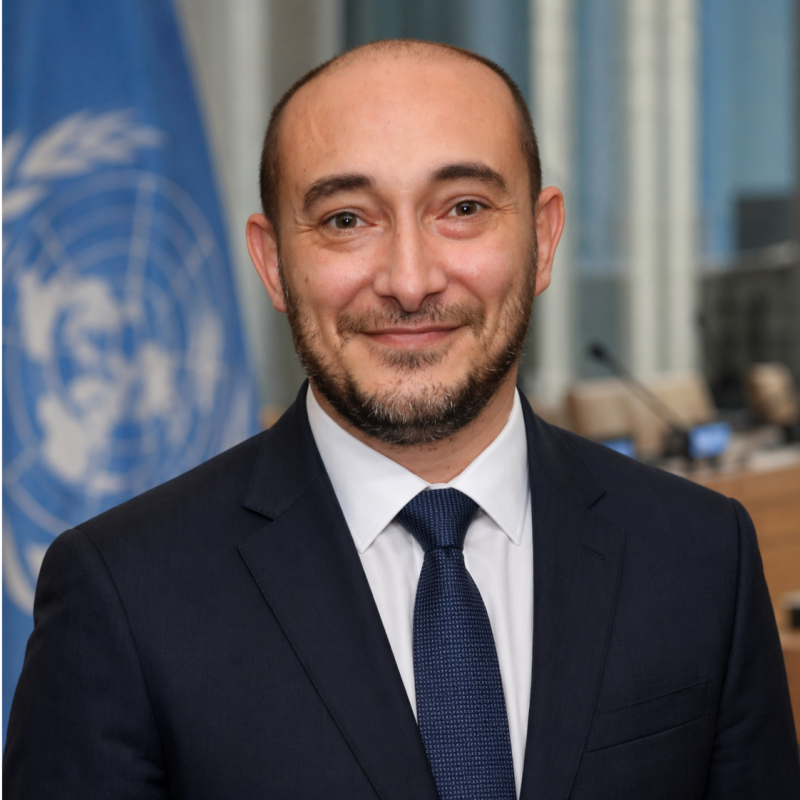
Dr. Mehdi Snene is a Senior Advisor to the UN Secretary-General’s Special Envoy for Digital and Emerging Technologies and the Head of Program of the UN Office for Digital and Emerging Technologies, where he leads global initiatives in AI capacity-building, digital public infrastructure, and emerging tech. He previously directed the €1 billion European Human Brain Project at the EPFL in Switzerland, advancing neuromorphic computing and brain simulation, and served as CEO and Chief AI Officer at HealthAI, overseeing the strategic development and deployment of AI in healthcare. A former Associate Professor at the University of Geneva, he founded and led a research lab at the intersection of AI, neuroscience, and high-performance computing at the Geneva University Hospitals.

MichèleGriffin currently serves as the Director of the Electoral Assistance Divisionin the United Nations Department of Political and Peacebuilding Affairs. Shepreviously served successive UN Secretaries-General as Policy Planning Directorwith responsibility for strategic thinking on emerging challenges, thegeopolitical landscape and the future of international cooperation. Prior tothat, she was responsible for establishing and running the UN Mediation SupportUnit and its standby team of mediation experts, aiding peace processes,transitions and crucial post-conflict elections around the world. She has alsoserved in UNDP and the Permanent Mission of Ireland to the United Nations.

Najia Hashemee is a governance and electoral assistance practitioner with more than 20 years of experience.
Her work focuses on inclusive participation, advancing women’s leadership and helping electoral institutions navigate digital transformation and artificial intelligence responsibly. She advises UNDP country offices, EMBs and regional networks on AI readiness and governance, information integrity, inclusive participation, and technology-facilitated violence against women in politics. She also leads UNDP’s Global Leadership Academy for Women in the Digital Era, which has connected nearly 300 leaders from 58 countries since its launch in 2023, strengthening women’s leadership and their role in shaping digital and AI governance.
Najia has designed and led governance and electoral support programmes across diverse contexts and supported networks advancing women’s and youth political participation. Before joining UNDP, she was a program manager with the National Democratic Institute for International Affairs, where she led initiatives to strengthen political parties and women’s political participation. She holds a master’s degree in political science from the University of California, Riverside.

Nathaniel Sebolai has served the Electoral Commission of South Africa (IEC) for more than seven years in a senior leadership capacity, driving key innovations across the organisation. He has been appointed to succeed the current Chief Information Officer, Mr Libisi Maphanga, upon his retirement in August 2026. During his tenure, he has led several strategic technology initiatives, including the introduction of Artificial Intelligence capabilities for cybersecurity, data cleansing, chatbot services, and Azure AI Vision. He is particularly interested in advancing the role of AI in election management to strengthen operational efficiency, security, and service delivery. He holds a Master of Science in Computer Science from the University of North Carolina at Charlotte.
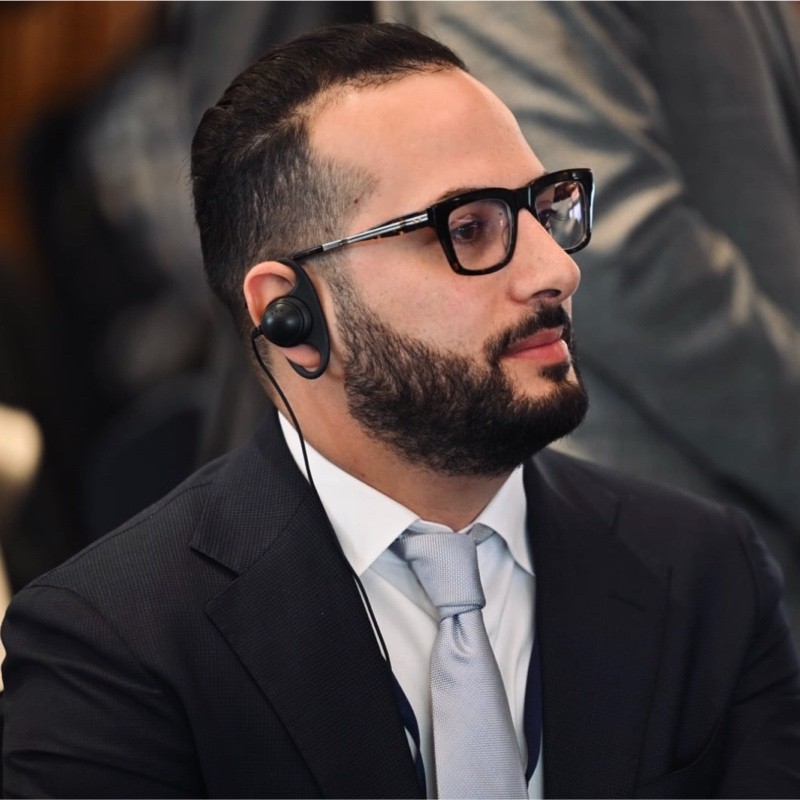
lorem ipsum

Patricia Peña leads a multi-faceted team at Global Affairs Canada responsible for the delivery of Canada’s international assistance, and increasing impact, innovation and engagement with a wide range of partners, including in the areas of development finance, and social and economic development. She has a rich and long-standing history working with Canadian, multilateral, civil society, private sector, philanthropic and diplomatic partners globally.
Since joining the Government of Canada in 2007, she held a number of senior positions at Global Affairs Canada and the Canadian International Development Agency (CIDA). She served as Canada’s Ambassador to Chile (2017-2020), Director General Foreign Policy and Director General Economic Development. From 2007 to 2011, Patricia held various policy and operational positions at CIDA, including as Director Democratic Governance and Human Rights, and Director of Economic Development and Natural Resources.
Prior to joining the Canadian public service, Ms. Peña lived for almost ten years in London, England and worked in various public sector agencies, including the UK Electoral Commission where she oversaw political financing regulation in the United Kingdom.
Patricia Peña has an undergraduate degree in Political Science from the University of Toronto and a Master's degree at the London School of Economics and Political Science.
Doctor of Constitutional Law and Full Professor of Constitutional Law at the Complutense University of Madrid. Specialized in the relationship between technology and democracy, electoral law, parliamentary law, and the fundamental rights of participation and freedom of expression. Visiting researcher at Georgetown University, Harvard University, George Washington University, Scuola Superiore Sant'Anna, and Dublin City University. He has been President and Council Member of the Council for Transparency and Participation of the Madrid regional government, Deputy Director of the Center for Political and Constitutional Studies, and a member of the Spanish government's Open Government Forum as well as the Venice Commission. He is currently a Researcher at the ICCAL Lab at the Max Planck Institute for Comparative Public Law and International Law in Heidelberg (2025/27), co-director of the Complutense Observatory of Disinformation, and co-principal investigator of the project "Electoral processes, the right to information and artificial intelligence (Electia)" (2026-2028), having previously served as principal investigator on four other funded research projects. He is a member of the Academic Committee of the Global Network for Electoral Justice, of the Advisory Board of the Media Observatory, of the Editorial Committee of the Revista Derecho del Estado (Universidad del Externado, Colombia), of the Scientific Committee of the Center for the Study of Political Parties (UNED), and a member — and former Director until 2021 — of the Research Group on Technology and Democracy (i+dem) at the Complutense University of Madrid. Winner of two Electoral Justice Innovation Awards, in the categories of "Transparency and Strengthening the Image of the Electoral Justice" and "Specific progress in a topic relevant to the GNEJ" (2023)

Robert Opp is the Chief Digital Officer and Director of the Digital, AI & Innovation Hub of UNDP, the UN’s sustainable development organization working across 170 countries globally. Under his leadership, the Hub combines digital, data, AI, innovation, and systems transformation capabilities to improve the lives of those furthest behind. Through this approach, the Hub drives dynamic and agile transformation at scale, delivering both immediate solutions and long-term systemic impact. Central to this work is UNDP’s Digital Strategy, envisioning digital as an empowering force for people and planet. Previously at WFP, Robert directed the Innovation and Change Management Division, launching the ’Zero Hunger’ innovation accelerator and the award-winning crowdfunding smartphone app ShareTheMeal.

Samson Itodo is the Executive Director of Yiaga Africa and a prominent voice on democracy, elections, and civic participation in Africa. He led the groundbreaking #NotTooYoungToRun campaign, which successfully reduced the minimum age for elective office in Nigeria and inspired similar youth-ledreforms globally. He serves on the boards of International IDEA and the Kofi Annan Foundation, and currently, the Chairperson of the African Union AdvisoryGroup on AI in Peace, Security, and Governance, where he leads work on developing continental guidelines for AI use in elections. He is also engaged in global initiatives focused on building AI governance frameworks for electoral integrity. He is a current member of the global AI Advisory Group on Elections and Commonwealth Training experts on AI in elections.
He has led democracy programs and international election observation missions in the United States, South Africa, Ghana, Liberia, Sierra Leone, and Ethiopia, and has served as a Commonwealth electoral and training expert in Africa and the Asia-Pacific. A visiting lecturer in election law, Samson contributes actively to advancing electoral jurisprudence and electoral reform. He holds a law degree from the University of Jos and a Master of Public Policy from the University of Oxford. He is currently pursuing a doctorate in law, researching the role of the judiciary in electoral processes. His work has earned numerous awards, including recognition by the United Nations, Gates Foundation, NDI, African Youth Awards, etc.
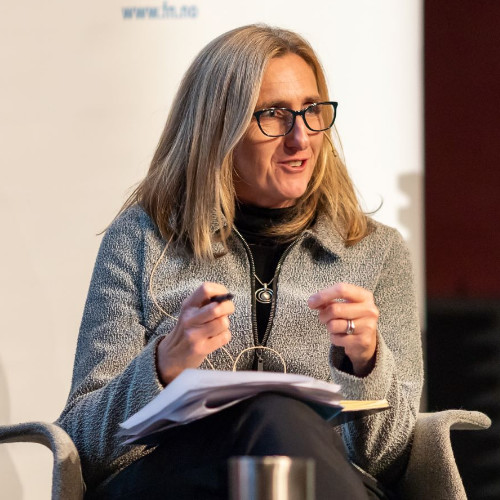
Sarah Lister is the Co-Director of Governance, Rule of Law and Peacebuilding Hub, UNDP and oversees policy and programme support to its governance portfolio globally, including electoral cycle support, parliamentary development, anti-corruption, information integrity, digital governance, legal identity, and youth empowerment.
She has more than 25 years’ experience working on democratic governance, including civic engagement, media and communication, social accountability, public administration reform and governance measurement.
From 2015-2019 she was the Director of UNDP’s Oslo Governance Centre where she led the team bridging research, policy and practice on governance and peacebuilding in transitional contexts, with a particular focus on SDG16.
Among other positions, she has also worked for BBC Media Action, the Afghanistan Research and Evaluation Unit in Kabul and the Institute of Development Studies, UK. She has lived and worked in Asia, Africa, Latin America and Europe. Sarah holds a PhD and MSc in Social Policy from the London School of Economics, and a BA in History from Cambridge University, UK.

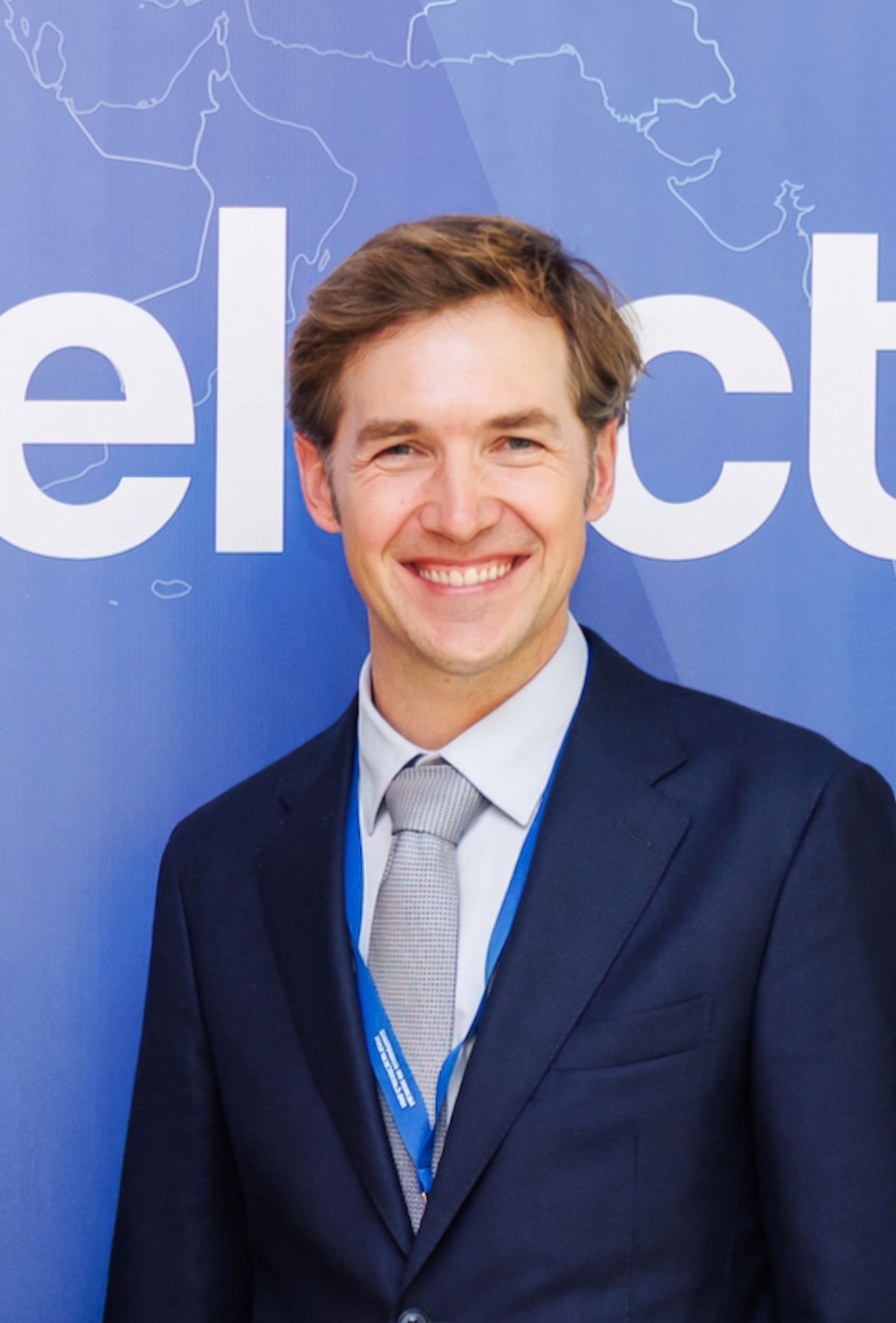
Skye Christensen is UNDP's Chief Technical Advisor for Electoral Assistance in Moldova, leading a $9 million, four-year project to strengthen the resilience of democratic institutions. The role focuses on countering coordinated inauthentic behaviour, illicit use of virtual assets in political finance, and electoral cybersecurity. Skye has 18 years of experience in governance and elections across more than 25 countries, including as Team Leader for a UK Foreign and Commonwealth Office initiative to restore governance in the Palestinian Territories, and as UNDP Chief Technical Advisor to the Palestinian Authority and UN Chief Technical Specialist for Pakistan's tribal areas. Skye began his career in Washington, DC, with the International Foundation for Electoral Systems, and holds a Bachelor of Arts from the University of Wisconsin-Madison and a Master of Arts in Political Science from Uppsala University.

M. Stéphane Perraulta été nommé directeur général des élections du Canada le 8 juin 2018. Il aoccupé le poste de directeur général des élections du Canada par intérim dedécembre 2016 à juin 2018.
M. Perrault s'est joint àÉlections Canada en 2007, à titre d'avocat général principal. En 2014, ila été nommé sous-directeur général des élections Affaires régulatoires. À cetitre, il était responsable des équipes de Financement politique, Servicesjuridiques, Vérification interne, Instruments régulatoires et Systèmes, et duBureau de l'intégrité électorale. Lors du réaménagement des secteursopérationnels de l'organisme en 2017, M. Perrault s'est également vu confiél'équipe des Affaires publiques.
De 2003 à 2005,M. Perrault a travaillé au Bureau du Conseil privé, plus précisément auSecrétariat de la législation et de la planification parlementaire et auSecrétariat de la réforme démocratique. Il a également été auxiliaire juridiqueauprès de la juge Claire L'Heureux-Dubé en 1997, puis il s'est joint à laSection des droits de la personne du ministère de la Justice. M. Perraulta été membre du Barreau du Québec de 1990 jusqu'à sa nomination, et possède unemaîtrise et un doctorat en droit. Il a enseigné à l'Université de Montréal et àl'Université McGill, où il a été boursier Boulton de 1995 à 1996.
Mr. Sultan bin Hassan Al-Jamali is currently the Secretary General of the Arab Network for National Human Rights Institutions (ANNHRI), and the National Human Rights Committee (NHRC).
Mr. Sultan bin Hassan Al-Jamali supported the establishment of new national institutions in the Arab world and his work with the Arab Network for National Human Rights Institutions has helped other institutions obtain the “A Status” from the Subcommittee of the Global Alliance of National Human Rights Institutions. He has also worked on developing the relations of the Arab Network for National Human Rights Institutions with many international and regional human rights institutions and bodies and on the signing of many memorandums of understanding and partnerships at the local and international levels.
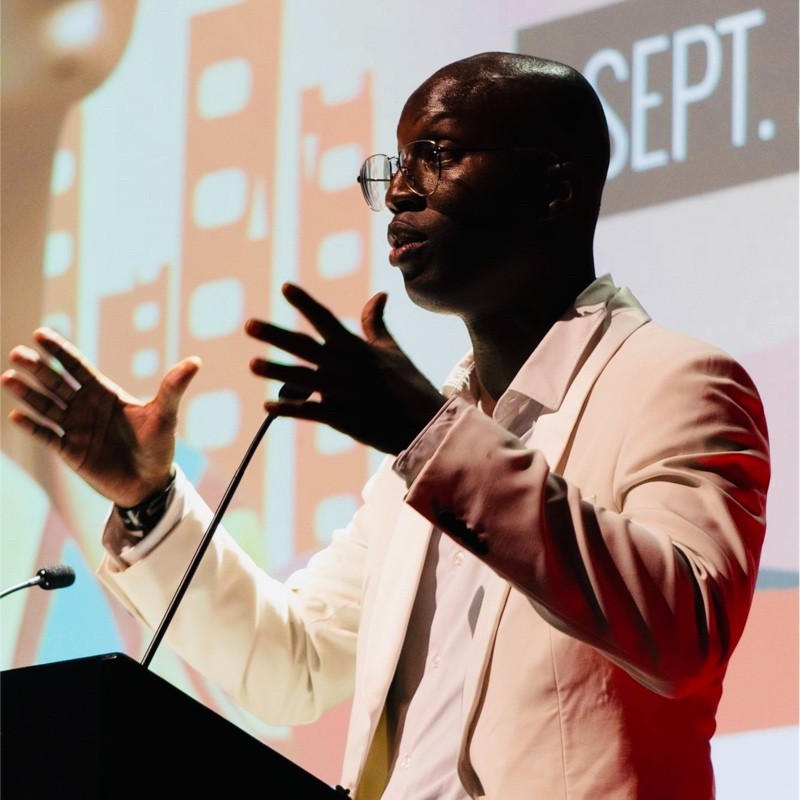
TiéouléTraoré is a Government and Regulatory Affairs executive at IBM Canada, workingat the intersection of technology, public policy and business. He advises onstrategic government and regulatory issues, with a particular focus on emergingtechnologies and the evolving digital policy landscape.
Priorto joining IBM, Tiéoulé built his career across public affairs, governmentrelations and strategic communications, developing extensive experiencenavigating complex political and policy environments. His background notablyincludes active involvement in Canadian politics, giving him first-hand insightinto political strategy, campaigns and the relationship between policymakers,stakeholders and the communities they serve. He also spent time advocating forthe interests of various highly-regulated industry sectors. Based in Canada, hebrings a combination of corporate, political and public-policy experience todiscussions on technology, government, regulation and advocacy.

TJ advises public institutions and civic organizations on trusted communications, operational resilience, and workforce development in highstakes environments. A former county-level election administrator, TJ brings frontline experience to national conversations about how institutions adapt under pressure. His work focuses on translating emerging risks – from artificial intelligence to operational and workforce resilience – into practical systems, training, and leadership strategies that strengthen public confidence. He designs workshops and strategic initiatives that help leaders move from reactive crisis management to proactive resilience. Known for pairing realism with optimism, TJ emphasizes tools that are actionable, scalable, and grounded in everyday operations. He has presented to thousands of election officials across the country on communications strategy, institutional trust, and operational readiness. He is the creator of several ongoing training series and programs, including Books and Ballots. TJ serves on the AI + Elections Clinic Advisory Board at Arizona State University’s Mechanics of Democracy Laboratory and is a senior fellow at the University of Maryland’s Center for Democracy and Civic Engagement. He was previously a director at The Elections Group, where he oversaw operations, programs and communications at different points during his tenure He holds a Master of Public Administration from Florida State University and a degree in Journalism from the University of Florida. Outside of his professional work, he enjoys traveling and spending time with his family.

Victor Margall von Hegyeshalmy is Procurement Lead for Electoral, Identity-related and Technology Procurement at UNDP Office of Procurement, Copenhagen office. In his role, he coordinates and manages a procurement team providing support to UNDP Country Offices and Beneficiaries. In his capacities, he provides specialized advise and support, conducting also through the team processes on behalf of UNDP Offices and Beneficiaries, especially when complex, urgent and politically visible deliveries are required. His work encompasses also contribution to procurement strategies and operational plans, liaison with relevant stakeholders and implementing Partners, development of framework agreements and tools, as well as participation in knowledge-based events and workshops, in representation of UNDP PSU. Victor is a Spanish national and holds an MBA Masters Degree from ESADE (International Business School, Barcelona), and a Cand. Merc. Masters Degree in International Management and Marketing, CBS (Copenhagen Business School).
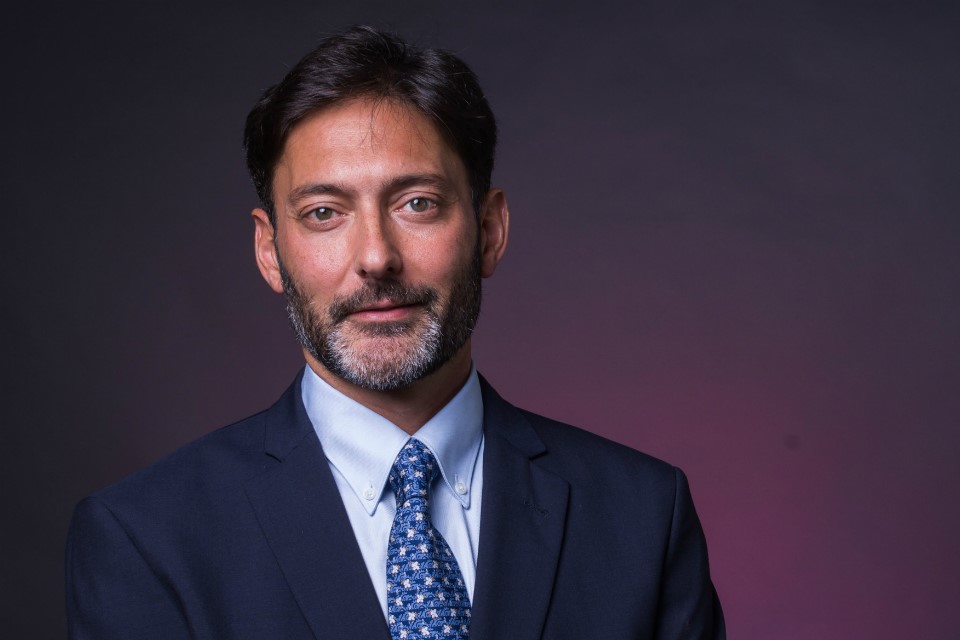
Vijay Rangarajan is Chief Executive of The ElectoralCommission since March 2024. Vijay was previously a Director General at the Foreign, Commonwealth and Development Office (FCDO), working on climate, energy and the environment, global health and Covid, and a wide range of countries. He served as the British Ambassador to Brazil and worked in the Ministry of Justice and Cabinet Office on electoral issues, leading the programme to establish individual electoral registration, and wider issues relating to political and constitutional reform of the UK.
The Electoral Commission is the independent body which oversees elections and regulates political finance in the UK. It is focused on ensuring strong participation in a resilient electoral system and safeguarding elections from threats such as mis- and disinformation, candidate abuse, and intimidation. It advocates for modernisation of elections to better help campaigners, administrators and voters navigate the system. The Commission also provides trusted information to voters, including through its democratic education offer and public awareness campaigns.
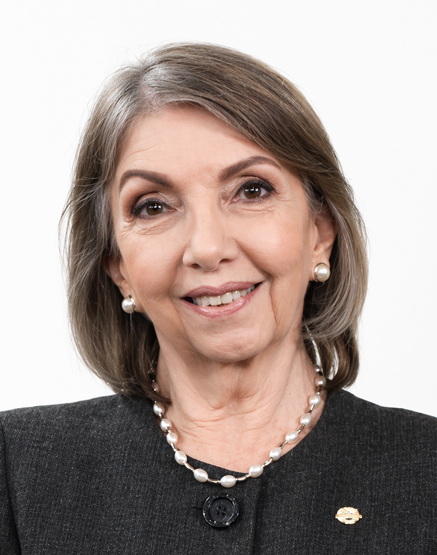
ZETTY BOU VALVERDE. Costa Rican lawyer, with extensive experience in Public and Private Law. Master in Public Law and Business Administration. Graduate of the joint INCAE-Georgetown University program: “Legal aspects of international business”. Expert in RAC methods. She has been an Arbitrator of Law and Conciliator in civil and commercial matters authorized by the Ministry of Justice and Peace, Labor Mediator authorized by the Ministry of Labor and Social Security, Facilitator of Corporate Social Dialogue, Legal Advisor of public and private entities, Curator of the Supreme Court of Justice, university professor, lawyer and external notary of State Banks and Public Institutions. In the electoral field, she was appointed by the Supreme Court of Justice in 2004 as Substitute Magistrate of the Supreme Elections Court of Costa Rica and assumed as Owner Magistrate in the periods 2009-2011 and 2017-2018. In August 2023 she was elected Chief Magistrate of that Court, a position she currently holds. She has participated as an exhibitor and panelist in local and international academic events and integrated electoral observation missions and horizontal cooperation in various countries. She is the author of several specialized publications.